
One hundred and eight
Malas
This is La Haute, the first: tanzanite, an amethyst cabochon, a tassel – a year of work with a woman who has made malas for three decades. Since then I have built malas from gemstones, 108, 54 or 27 positions, for one person and one phase of life.
High-jewellery malas from the MXHM atelier in Munich: 108, 54 or 27 positions in gemstones, set in gold or platinum, composed for the person and the phase of their life, over months and together with a medium. Every mala begins with a conversation.
The occasion
At a threshold
Most often a mala comes into being at a transition: when something has ended, or something new begins. A profession laid down. A child moving out. An illness overcome. Almost every mala I have built began at such a threshold, and that is the real function of the form: it counts something off and begins again.
That is why I ask first about the person who will wear it, not about the stone. What are you coming from, what are you moving towards, and which of the two should the piece carry with it?
La Haute
The story of the first
I had been a jeweller for more than fifteen years, had held thousands of stones in my hand, and felt a quiet dissatisfaction with the surface of my own craft. I wanted to go deeper.
A coach who was accompanying me through a time of great change said one sentence after a long walk: “Why not take a look at Buddhist malas.”
The remark fell on prepared ground. Ibiza has been a home to me since my youth, and what has grown there between the hippie legacy and today's spirituality shaped me before I knew it. I have spent weeks in an ashram on Bali. The mala fitted none of the drawers I had served as a jeweller, and that is why it drew me.
I began to research how a mala of the highest quality is made today. The search led through Los Angeles, Bali, Nepal and Ibiza, and ended in Munich, a few minutes away by bicycle: a woman who has been making malas for three decades, from a deep practice of her own. I rang the bell. She opened the door, looked at me, and said: “I have been waiting for you.”
For a year we worked on a piece of which neither of us knew who it was meant for.
When it was finished I displayed it in my atelier, not to sell it, but to wait. My partner had said at the beginning: “Believe me, it will find its wearer. She will put it on, and she will no longer ask what it costs. She will ask why it glows.”
It lay there for half a year. People picked it up, said polite things, put it back. Then one evening a long-standing client was at my home with her husband. The mala was draped, for fun, over a sculptor's bust. She picked it up. She put it on. Then she stood still for a while and said, almost to herself: “Why does this glow like that, and why do I not want to take it off again?”
She has worn it since that hour.
The full story is in my book Schmuck, der Vermögen schafft (Jewellery That Creates Wealth).
From the atelier
One piece, four views
A mala for a man. Smoky quartz, onyx and jade, between them rondelles of burnished 18 kt gold, kept dark so that the stones stand in front. At the centre a champagne diamond, emerald cut, flanked by two jade beads; the narrow rondelles beside it are set with champagne diamonds. Built without a tassel, so that it can be worn like a necklace.

What it is made of
108 decisions
The base note is set by tanzanite beads. The centrepiece is an amethyst cabochon; on its back, where only the wearer knows it, a mantra is engraved by hand.
To the left and right, two pale green prehnites set a calm contrast. Between them lie warm golden tourmalines, faceted, and brilliant-cut diamonds set in blackened platinum: white on dark, so that they do not flash but are simply there. The finial is a tassel of faceted amethyst beads that moves as you walk.
Every element has a counterpart in the symbolism of the mala. Even so, the piece comes across not as esoteric but as calm.
Design, stone selection and construction are my work; the settings were made by the goldsmith I chose for this piece.

The old text
What holds the beads together
An Upanishad, the Akshamalika, deals with nothing but this object. What it explains first is not the bead but the thread.
The inner thread of gold stands for the highest, for what lies behind all appearances. Right runs a thread of silver, left one of copper, for two gods who depend on one another. The upper side of every bead is Sarasvati, the underside Gayatri. The knot is nature. The hole in every bead is knowledge.
A piece of jewellery whose most important part is the invisible one: an idea a jeweller does not easily shake off.
The movement, too, is prescribed. The row leads to a larger bead, the guru or meru bead, named after the mountain that is the axis of the world. You do not pass over it. You turn the string round and walk back. A ring sits, a necklace hangs; a mala asks something of you.
Japa is the repetition of a mantra, mala the garland. The form comes from India, adopted by Hinduism, Buddhism and Jainism alike; the rosary is the same idea, a few centuries later and two thousand kilometres further west.
The number
Why 108
There are several answers. Buddhism counts 108 kleshas, the afflictions of the mind that stand between a person and clarity. Hinduism knows 108 Upanishads. The Sanskrit alphabet has 54 letters, each in a masculine and a feminine form: 108 again.
In my atelier it has a practical consequence: 108 positions that have to match one another. That is the difference from every other piece I build.
How it came to Europe
A picture from 1982
To Europe the mala came late as a worn object, and by a particular route. From 1970 Chandra Mohan Jain, then called “Bhagwan Shree Rajneesh”, gave his disciples a new name at initiation and a mala of 108 wooden beads. The string was the sign.
Tens of thousands of Europeans, many of them from Germany, went to Poona in the seventies and eighties and later to Oregon. The movement was controversial and has remained so. But for a whole generation this was the first moment in which a mala did not lie in a museum but hung around a neck.
Here my work begins: a mala is tool, sign and piece of jewellery at once. Then it also deserves the material one gives a piece of jewellery.


The ten materials
Gemstones are in the text
The same Upanishad lists ten materials: coral or ruby, pearl, rock crystal, shell, silver, gold, sandalwood, the fruit of the putrajiva tree, lotus seed and rudraksha. The threads are to be of gold, silver and copper.
The modest and the precious stand side by side, as equals. The sandalwood mala is one of ten possibilities, not the original from which everything else deviates.
What changes is the construction. A mala of wood is strung and knotted; one of gemstones is set, so that stone does not rub against stone.
The text goes on to describe how a mala is consecrated, with milk, with scented pastes, with a mantra for every bead. That is not my task. I build the piece.
The selection
Which stones for which person
Assigning stones to a person is nothing new. Indian astrology knows the Navaratna, the nine stones: ruby for the Sun, pearl for the Moon, red coral for Mars, emerald for Mercury, yellow sapphire for Jupiter, diamond for Venus, blue sapphire for Saturn, hessonite and chrysoberyl cat's eye for the two lunar nodes, worn in a fixed arrangement with the ruby in the centre.
I am not an astrologer, but I work with what people bring: a birth chart, or only a colour.
For the energetic composition I work together with a medium, ever since the first mala. I select the stones by quality and origin; which of them belong to this one person, the three of us decide together.
What I do not do: promise an effect. Whether it is the right one for you, you will notice when you hold it in your hand.
The lengths
108, 54, 27
A full mala has 108 beads. The tradition also knows 54 for the half round, walked twice, and 27 for the wrist. Neither is a shortcut.
A half mala can be worn under a collar. A twenty-seven becomes a bracelet, the piece one really wears every day. Both can be added to an existing mala, from the same stones and with the same setting.
माला
mālā — garland, row, string
- 108The full round. A necklace that lies across the chest.
- 54The half mala. Walked twice, worn shorter.
- 27The wrist. Walked four times, worn daily.
The 54 length
A half mala
A finished piece in my showroom. Antique aquamarines as rondelles, with green tourmalines: as marquises above the pendant and as the centre, in an emerald cut. Set in platinum, the links set with brilliant-cut diamonds. Instead of a textile tassel hang three strands of aquamarine carrés.

Closer to the neck: the length at which a prayer string becomes a piece one wears to dinner.
A second level, if you want it
108 curated stones
A mala needs no justification beyond the person it is made for. But it can also be built as a small, documented collection – an option, not a condition.
At the centre then stands a centre stone with its own standing in the collectors' market, an untreated top spinel, a padparadscha, a fine Paraíba. Around it, certified single positions on a smaller scale, or stones that deliberately remain decorative.
The result can be worn, inherited or sold as a unit: 108 positions, each with its own history, on the body rather than in the safe. I promise no appreciation.
The figures are on the page Gemstones as an investment, with the sober side: what a portfolio can do and what it cannot.
Designs
Five directions
These pictures show designs, not finished pieces. But for several of these directions I have already found the right stones.


If one of these directions draws you, tell me; we build on from what is already there.
Frequent questions
What I get asked about malas
- What is a mala?
- A prayer and meditation string of 108 beads, plus one larger bead known as the guru or meru bead. It comes from India, where it is documented from the first millennium BCE. In the West the same idea is known as the rosary.
- Why 108?
- No tradition settles on one explanation. Buddhism names 108 kleshas, Hinduism counts 108 Upanishads, the Sanskrit alphabet has 54 letters in a masculine and a feminine form each. The number is old, it is the same everywhere, and that is enough.
- Can a mala be worn as jewellery?
- Yes, and it has been for a long time. But a mala is first a tool and only then a piece of jewellery.
- Is a mala made of gemstones not a distortion of the idea?
- No. The Akshamalika Upanishad names ten permitted materials, and coral, ruby, pearl, rock crystal, silver and gold stand there beside sandalwood and rudraksha.
- How long does it take?
- We worked on La Haute for a year, most of that time on the stones. More than a hundred positions have to match one another; that cannot be hurried.
- Can a mala be an investment?
- It need not be. If you want it: a centre stone with its own standing in the collectors' market, the rest bought certified and with origin. I promise no appreciation.
- Does it have to be a full mala?
- No. The tradition knows 54 beads for the half round and 27 for the wrist, as a bracelet. Both can be added to an existing mala from the same stones.
- How are the stones chosen for me personally?
- In conversation. For the energetic composition I work together with a medium; I myself select by quality and origin. I do not promise an effect.
- Is it blessed or consecrated?
- No. I build the piece; what happens with it afterwards belongs to the wearer and her practice.
Your mala
How it begins
Not with a design or a budget, but with a conversation about what the piece is for. Then the gathering begins: more than a hundred positions that must match in colour, size and transition. It takes months, sometimes a year.
If you would like to tell me what you have in mind, even if it is not yet an image but only a feeling for what is missing, you can reach me directly.

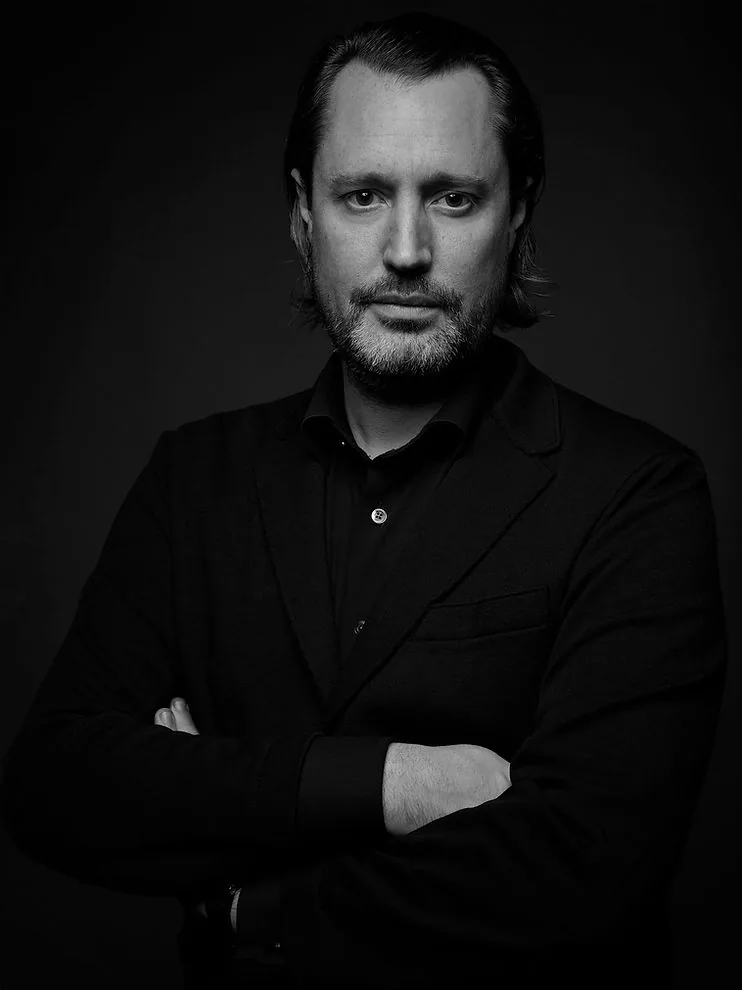
Maximilian Hemmerle von HeckelFifth-generation jeweller · Munich
WhatsApp sayhi@mxhm.de +49 89 21 53 60 66
You are writing to a small, personal team, and usually to me directly.
Enquiry