Coloured gemstones
Sourced at the source
I buy every stone myself – in Hong Kong, Bangkok, Colombo, occasionally at the mine. Untreated where nature allows, always with an independent certificate, always with a story that can be told.
Filmed at the atelier, unretouched
Ruby
Burma and Mozambique. The most valuable coloured stone in the world.
Sapphire
Royal blue from Ceylon and Madagascar, Padparadscha for connoisseurs.
Emerald
Colombia and Zambia. The rarest green in nature.
Paraiba
Neon blue even in the shade. The rarest coloured stone of all.
Spinel
Mahenge, Tanzania. The insider's stone, untreated by nature.

Imperial Topaz
Ouro Preto, Brazil. Brazil's best kept secret, in sherry and peach.
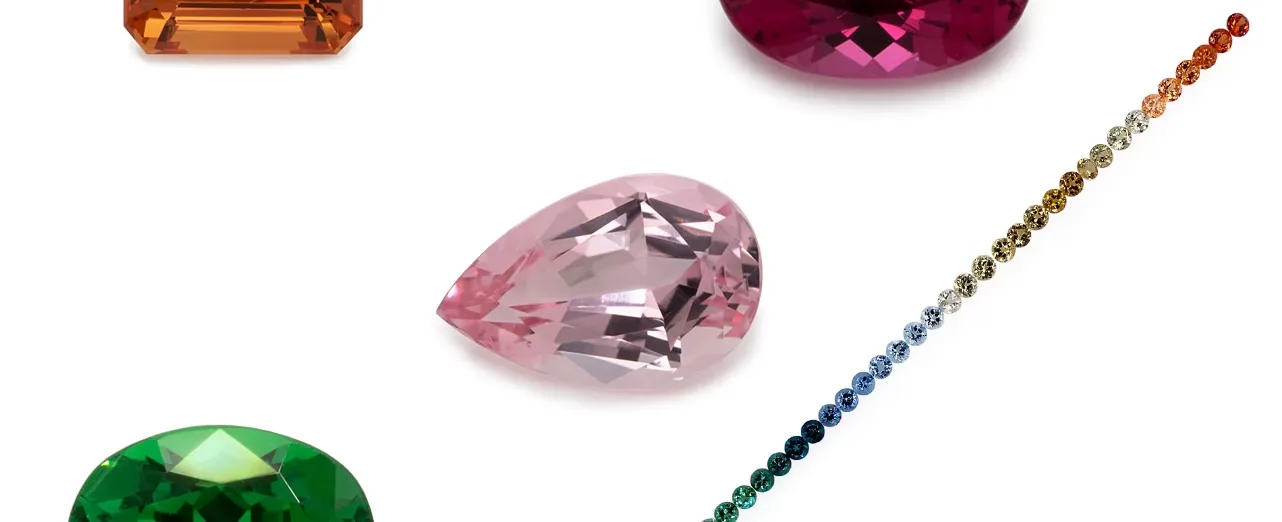
The six stones
Stones as an investment
Fine coloured gemstones have moved clearly upward in price over the past two decades – not every stone, but the untreated ones with documented origin. What matters is not the carat, but the combination: origin, no treatment, vivid colour, and a certificate from SSEF, Gübelin or GRS. Two visually similar stones can differ in value by a factor of ten. What I write here is experience from the trade, not investment advice.
I build gemstone portfolios for collectors: single important stones or a structured position across ruby, sapphire, emerald and Paraiba. Personal advice, documented provenance, secure custody if wanted.
The information on this page is provided for information purposes only and does not constitute investment advice. Past performance is not a reliable indicator of future results.
Frequent questions
What I am asked most often
- Are gemstones a good investment?
- Top-quality coloured gemstones have held their value over decades and frequently multiplied it. But this is not a listed market: valuation requires expertise, and selling does not work at the touch of a button as it does with gold. Accept that, and you own a real asset independent of currencies and interest-rate policy.
- What size of budget does a portfolio start at?
- It depends on the stone. Entering through Mozambican rubies or Zambian emeralds is considerably more accessible than through Burma or Colombia. Tell me the order of magnitude and I will tell you honestly what makes sense within it and what does not.
- Which stones are suitable?
- Ruby, sapphire, emerald and Paraiba tourmaline are the established four. Spinel and imperial topaz are the niches where market awareness is only now catching up. In every case it is quality that decides, not the species.
- How are the stones stored and insured?
- Certification is done, as always, by an independent laboratory of your choice; I recommend GRS, SSEF, Gübelin or GIA. Insurance can run through my partner Segurio. Secure storage I arrange worldwide, however you prefer it: bonded warehouse, vault or safe-deposit box. A stone can equally be set and worn without losing its value.
- How do I sell later?
- I accompany the sale through the same channels I buy in: trading centres, auction houses, collectors. Every good stone finds a buyer. An independent certificate and a documented origin decide how quickly, in which circle and at what price: they spare the buyer the examination and spare you the discount.

Personally
Stones I hold in my own hands
I buy every stone myself, with a certificate and documented origin, and tell you honestly whether it is worth its price. If you wish, I stay with you afterwards: certification, storage and, one day, the sale.
If you would like to talk about a stone or a portfolio, you can reach me directly.

Maximilian Hemmerle von HeckelFifth-generation jeweller · Munich
WhatsApp sayhi@mxhm.de +49 89 21 53 60 66
You are writing to a small, personal team, and usually to me directly.
Enquiry