
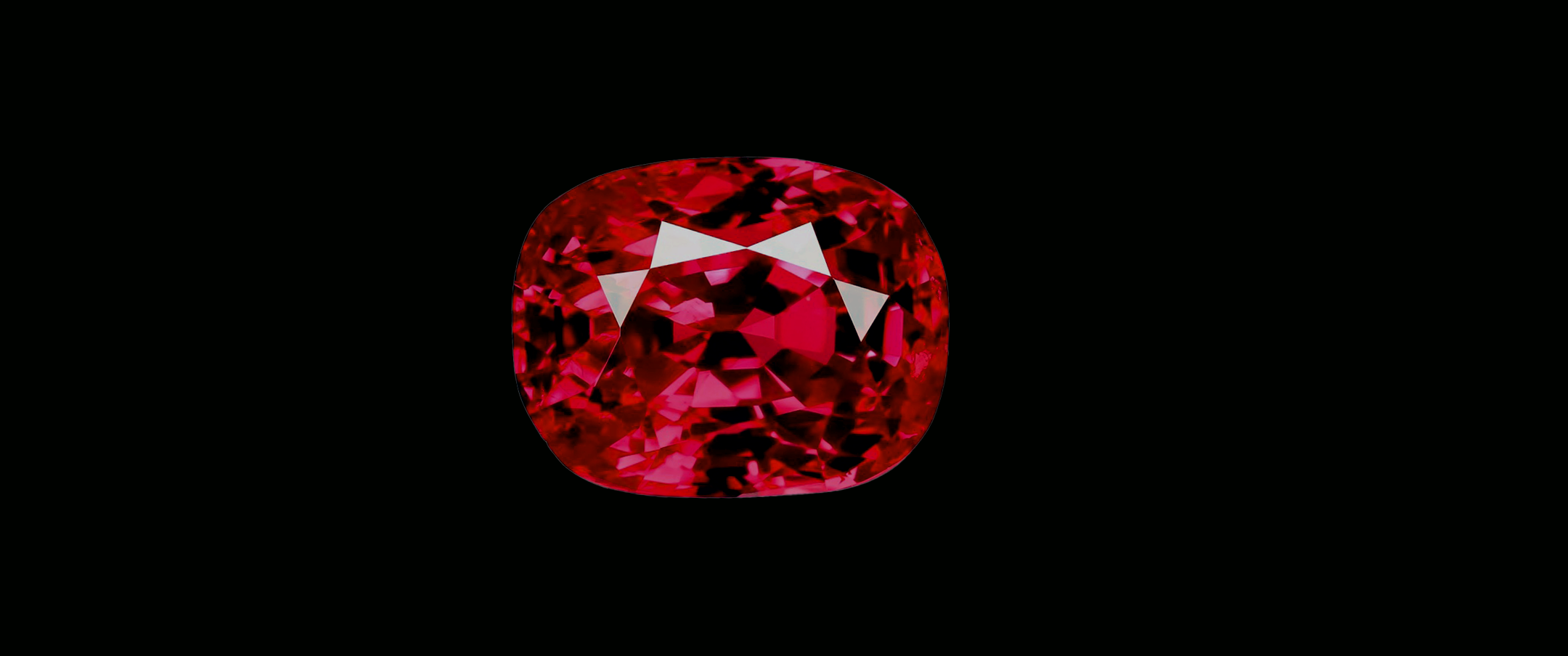
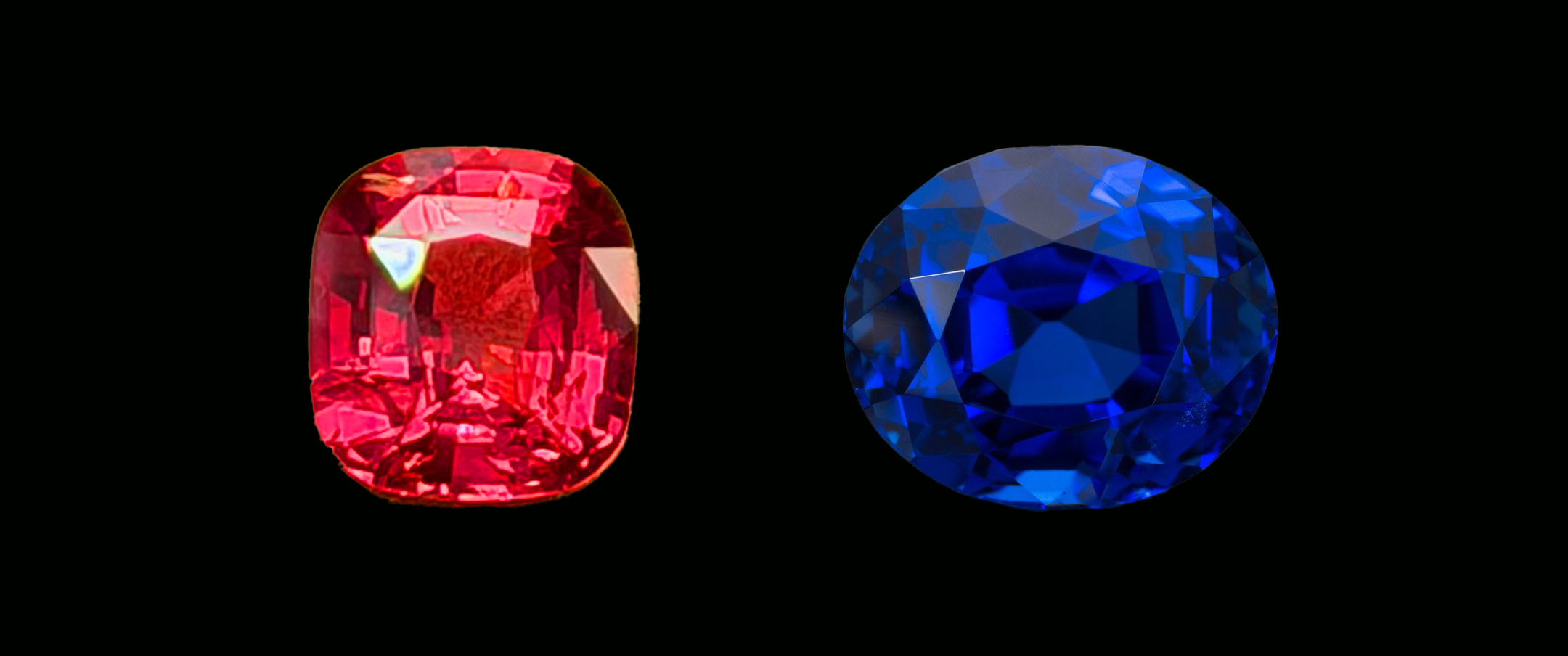
Take two sapphires. Both three carats. Both blue. Both decently cut. At first glance, they are hard to tell apart. One costs €1,500 per carat. The other, €18,000.
It is not what most people suspect. Not the cut. Not the carat weight. Not even the obvious clarity. The difference lies in a handful of factors that only reveal themselves once you know what to look for, and the most important of them appears in no textbook on the 4Cs.
This article explains where that price range comes from. Not to press anyone towards a purchase, but to show what separates one stone from another when both are lying on the table.
The 4Cs explain the diamond. They do not explain the gemstone.
Carat, Color, Clarity, Cut. Four letters that have structured the diamond market since the 1950s. With them, the Gemological Institute of America created a system that works: it makes diamonds comparable.
With coloured gemstones, this grid works only to a limited degree. Anyone who tries to assess a ruby or sapphire by the same categories misses the essential. For with coloured stones, three factors come into play that hardly matter with diamonds, and it is precisely these three that often make the decisive difference in price.
Factor 1: Origin
With diamonds, origin is almost irrelevant. A stone from Botswana and one from Russia look the same once cut; the market values them identically. With coloured gemstones, origin is everything.
A sapphire from Kashmir costs many times as much as an optically near-identical sapphire from Madagascar, not because one is more beautiful, but because the Kashmir deposits have been practically exhausted since the 1930s. What can no longer be replenished becomes more expensive. This logic applies to every class of gemstone.
Burma, today's Myanmar, produces the most famous rubies in the world. For centuries, the Mogok Valley has yielded stones in that deep red with a slightly bluish undertone known as "Pigeon Blood". A comparable stone from Mozambique can look just as beautiful, but it costs less, sometimes only a third.
With emeralds, it is Colombia, the mines of Muzo, Chivor, Coscuez. With Paraiba tourmalines, it was originally the state of Paraíba in Brazil; today the market also accepts stones from Mozambique and Nigeria, but at markedly lower prices.
An experienced gemmologist often recognises a Kashmir sapphire before reading the certificate.
Factor 2: Treatment
Almost every sapphire on the market has been heated. Heat clears inclusions, intensifies colour, turns a mediocre stone into a presentable one. It is a treatment practised for centuries and accepted within the trade.
But: an untreated sapphire of the same quality grade costs three to five times as much.
Why? Because untreated stones of the highest quality are extremely rare. Nature produces only a tiny fraction of all sapphires in such a way that they unfold their full beauty without heat. These stones are, in the literal sense, originals.
The note "unheated" or "no indications of heat treatment" on a certificate from SSEF, Gübelin or GIA is therefore a driver of price that often overrides the other factors. The same holds for rubies. With emeralds, the question is one of oil treatment, minor, moderate or significant, and here too every step upwards shifts the price noticeably.
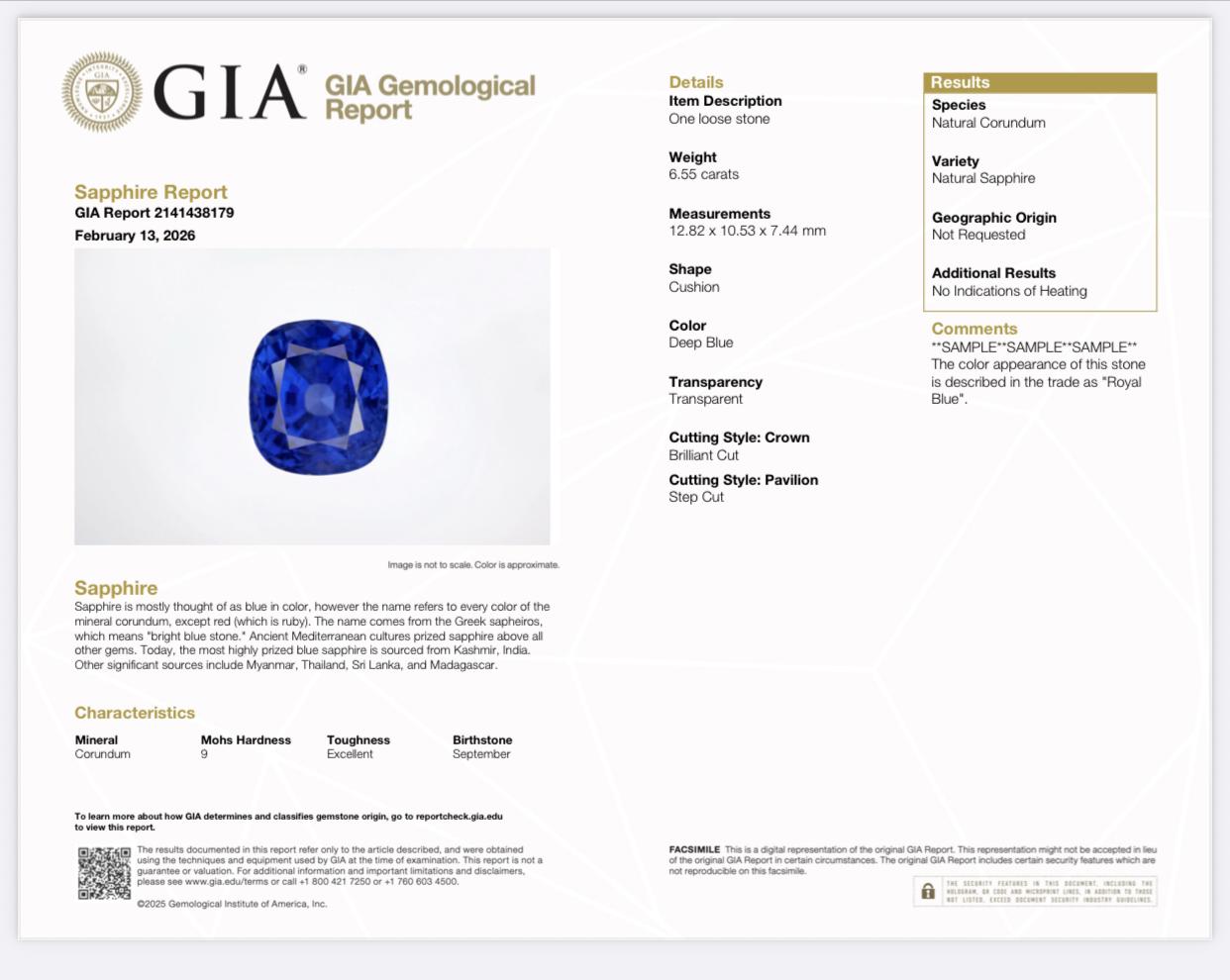
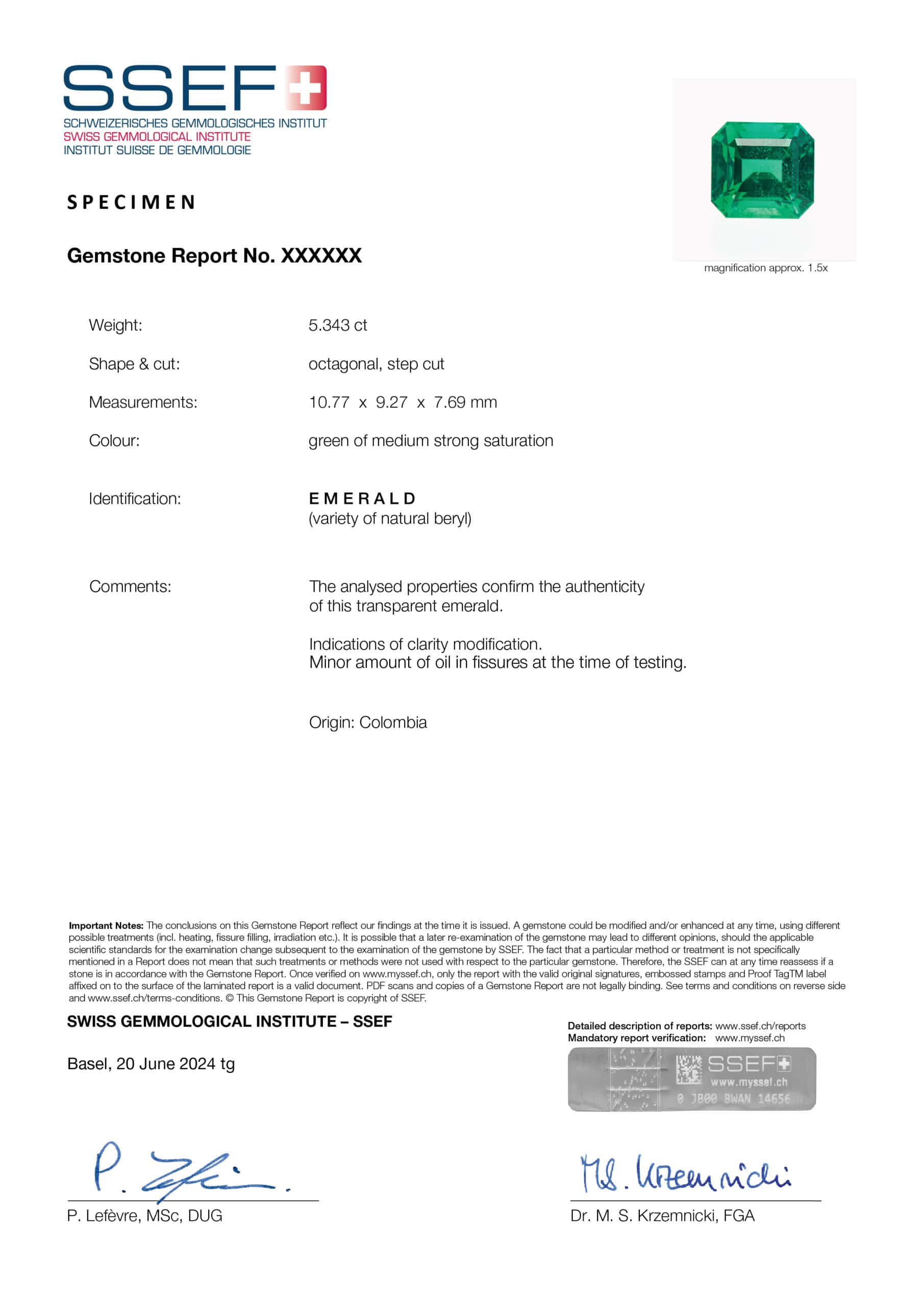
Independent certificates from SSEF, Gübelin or GIA document origin and treatment, the two factors that move the price most.
Factor 3: Colour as a whole, not as a letter
With diamonds, colour is a scale from D (colourless) to Z (yellowish). A one-dimensional assessment.
With coloured stones, colour is a three-dimensional phenomenon: Hue (the actual shade), Saturation (how rich and pure the colour appears) and Tone (how light or dark it is). Only the interplay of these three dimensions produces what connoisseurs are looking for.
A sapphire can be blue and yet appear greenish. A ruby can be red and yet too dark, almost brownish. The market names that have become established for the top qualities describe precisely these ideal combinations:
"Pigeon Blood" in ruby: deep red with a hint of blue, rich but not too dark, with an inner glow.
"Royal Blue" and "Cornflower Blue" in sapphire: two different, but both sought-after, shades of blue, the one rich and deep, the other vivid with a slight lightness.
"Vivid Green" in emerald: a green that rests within itself, neither too light nor too dark, with that slightly bluish undertone that distinguishes only the finest Colombian stones.
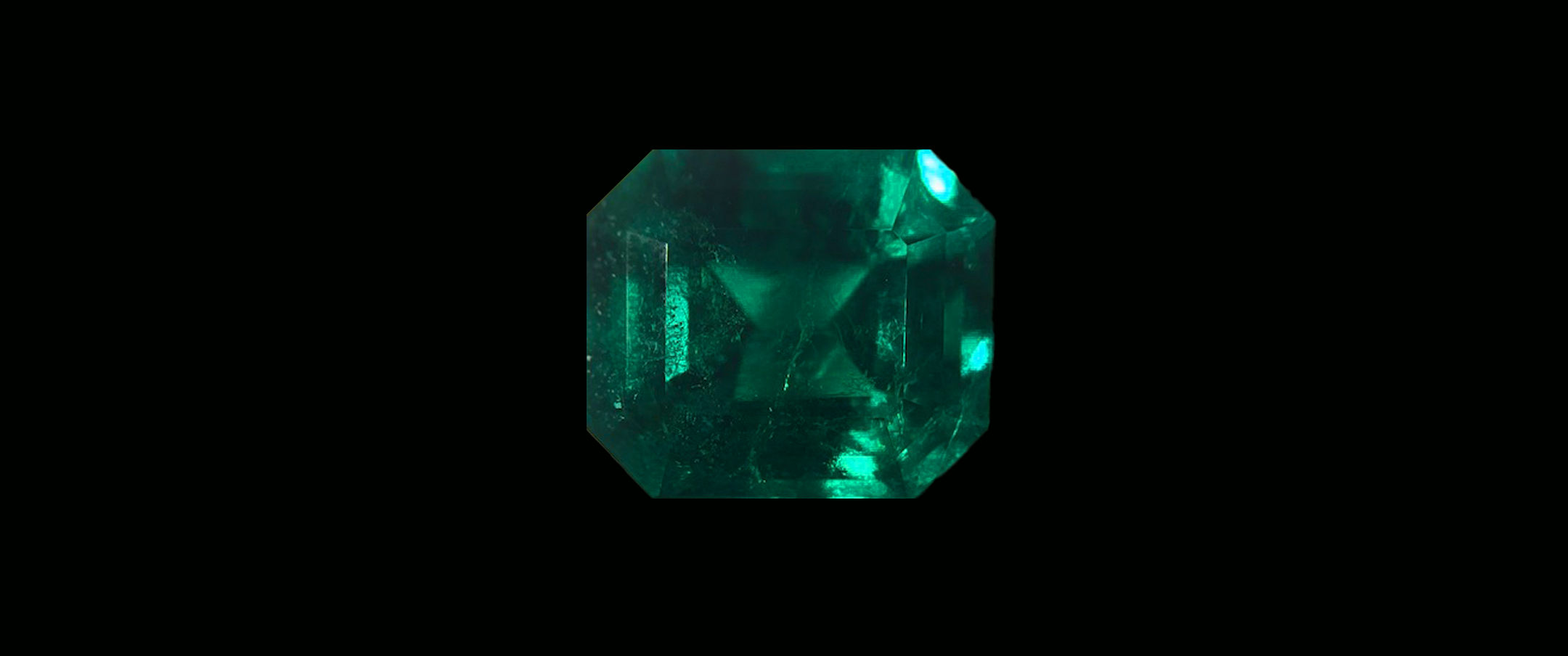
These designations are no marketing inventions. SSEF in Basel and Gübelin in Lucerne award them on certificates according to strict criteria. A "Pigeon Blood Burma" on paper doubles or triples the value of an optically near-identical stone without that designation.
Factor 4: What the 4Cs do not capture, liveliness
There is a point at which all measurable categories reach their limits. The point at which two stones look identical on the data sheet, yet in daylight seem like two different worlds.
Gemmologists call it brilliance, fire, scintillation. In the atelier we often simply say: One stone lives, the other does not.
Liveliness arises from the interplay of cut, inner structure and the way light travels through the stone. Two stones of the same quality grade can respond to light in dramatically different ways. One appears lit from within, almost as though it were radiating. The other remains flat.
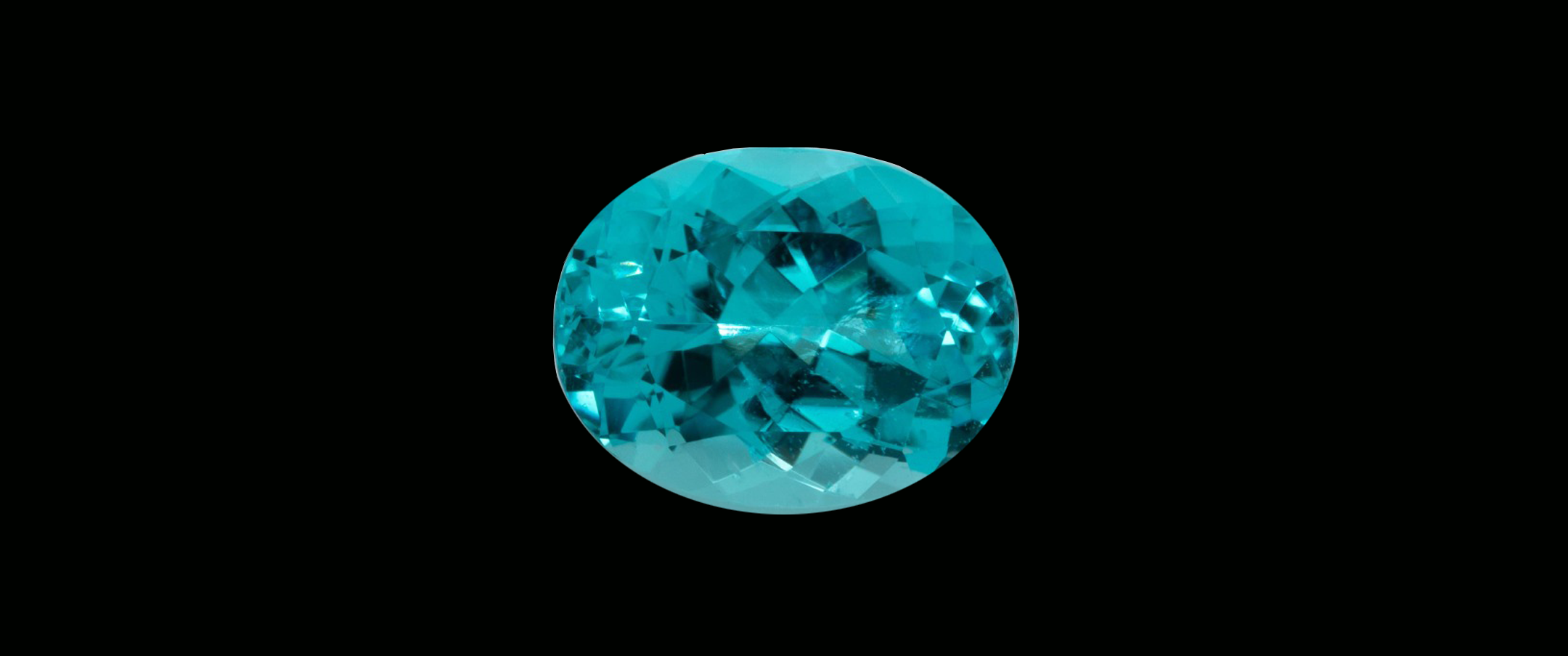
It is the factor that is hardest to describe and easiest to recognise, once you have held enough stones in your hand. It appears on no certificate. At an auction, anyone who looks recognises it. And in the end, it is precisely this that often separates the stone that shows a decent increase in value from the one that becomes a piece for generations.
What this means in practice
When you stand before two stones and one costs ten times as much as the other, it is worth asking three questions, in this order:
First: where does the stone come from? Do not merely take the origin on someone's word; have it confirmed on a certificate from a reputable laboratory. SSEF, Gübelin and GIA are the names that are recognised internationally.
Second: has it been treated? Here too, the certificate counts. "No indications of heat treatment" or "untreated" are the wordings you are looking for. With emeralds: the classification of the oil treatment.
Third: how does it look in daylight? This is the one test in which the eye matters more than the paper. If possible, take the stone to the window. Move it. Watch how the light passes through it. A lively stone shows you its quality without explanation.
Only once these three questions have been answered is it worth looking at carat, cut and the classic clarity characteristics. The 4Cs are not wrong; they are simply not the whole picture.
Why this difference is growing in the market
In recent years, the gap between the top and the average quality grades has widened further. The reasons are structural: the famous deposits are producing less. For years, the auction houses have documented that top stones of verified provenance rise in value faster than the gemstone market as a whole.
With a Burma ruby of pigeon-blood quality above three carats, we are speaking of an increase in value that lies well above what a comparable stone from a more recent deposit shows. With Mahenge spinels from Tanzania, whose deposits have been known since around 2007 and are now becoming exhausted, this pattern is currently repeating itself in fast motion.
Anyone who regards a gemstone purely as a piece of jewellery can ignore these distinctions; both stones are beautiful, both can be worn. Anyone who also understands it as an investment should know them.
What counts in the end
Gemstones are not a mass market. They follow a logic of their own, in which provenance, treatment status and liveliness often weigh more than anything a database can capture. That is exactly why they are so fascinating to some people, and inaccessible to others.
A deposit that no longer produces. A colour that came about without heat. A light that stays caught within the stone.
Those who understand these factors do not buy more expensively. They buy more precisely.
If you have a particular stone before you and are wondering what defines it, or are looking for one that you know should outlast the generations, we would be glad to talk about it. In person, without haste, without obligation.
Book an appointment
Image Credits
All gemstone photographs and certificate images: MXHM Fine Jewelry, Munich. The stones shown are from the atelier's own stock; the certificate images are used with the express consent of their respective owners, and personal data and certificate numbers have been redacted.