
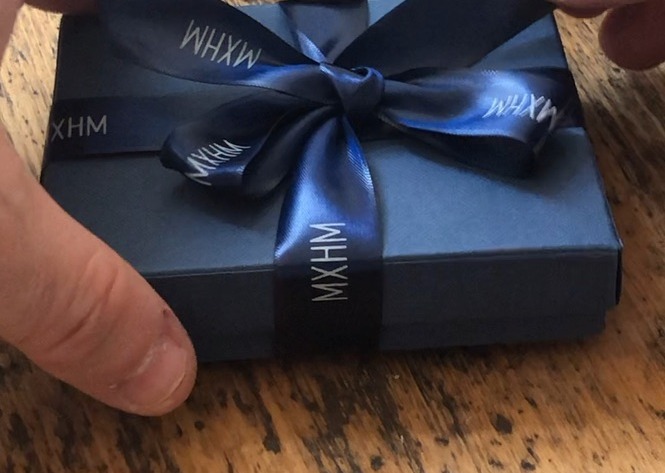
The German word schenken, to give as a gift, has an older meaning than the one we intend today. It comes from the Old High German skenken, which meant to pour, to give someone something to drink. At court, the Schenk was the cup-bearer. Only gradually did the word migrate from the gesture to the object, from pouring to handing over.
I find that revealing. Because in the original image, the gift is not a thing at all. It is an act: someone stands up, walks over, pours. The drink is merely the occasion. What arrives is the attention.
This is precisely where the misunderstanding lies that undoes most gifts. We think from the object outwards, and then ask ourselves whether it is big enough.
Why we give at all
In 1925, the French ethnologist Marcel Mauss described something in his Essai sur le don that nobody has seriously refuted since: in almost all the societies he studied, gift-giving was not a sideshow of economic life but its foundation. Whoever gives, obliges. Whoever receives is bound. Whoever reciprocates keeps the bond alive.
Mauss described three obligations that together form a social scaffolding: to give, to accept, to reciprocate. A transaction ends the moment both sides have delivered. That is its purpose. A gift never ends. It deliberately leaves something open, and that openness is the relationship.
That is why a gift feels wrong when it balances the account too precisely. Whoever receives, at Christmas, the exact counterpart to their own present has not been given a gift; they have had an invoice settled. And that is why the opposite is uncomfortable too: a gift so large that it cannot be reciprocated creates no bond, only an imbalance. Both are forms of poor manners, not because they break a rule, but because they turn the relationship into a balance sheet.
The giver's blind spot
Over the past twenty years, psychology has measured fairly precisely why giving so often misses the mark. Two findings are particularly uncomfortable, because both begin with the giver, not the recipient.
The first: we overestimate surprise. In 2011, Francesca Gino and Frank Flynn showed that recipients are reliably happier with things they had explicitly asked for, while givers believe the unprompted, self-devised gift is the better one because it proves effort. It does prove effort. It simply hits the mark less often.
The second finding goes deeper. Adelle Yang and Oleg Urminsky call it the smile-seeking hypothesis: givers systematically choose the gift that triggers the strongest immediate reaction, not the one the recipient will be most content with over time. The reason is banal and human: we see the smile at the unwrapping. We do not see the years that follow.
Lay these two findings side by side and you have the whole misery of the gift table before you. We buy for the moment of unwrapping. The recipient, however, lives with the result for years afterwards.
What manners have to do with it
Seneca devoted an entire book to the subject, De beneficiis, and in it he is surprisingly strict, not with the recipient but with the giver. A benefit is spoiled, he writes, if it is given with hesitation, if it is mentioned later, if it expects something in return. What counts is not the thing but the disposition of the one who gives.
At its core, that is a rule of manners, and manners is not the stiff word here that one might take it for. Manners means: leaving the other person their freedom. A gift that comes with an expectation attached is not one. A gift that is later brought up again was a loan.
Buddhism formulates the same thing from the other side. Dāna, giving, stands there first among the perfections, before ethics, before patience, before wisdom. Not because generosity would be the highest virtue, but because it is the simplest: the lowest threshold into an attitude that is otherwise hard to practise. What is decisive is not the value of the gift but freedom from attachment to the outcome. Whoever gives while keeping an inner tally has done something other than give.
There is an image in this tradition that I cannot get out of my head: only when giver, recipient and gift are no longer thought of as separate is the giving pure. One need not be a Buddhist for that. It is enough to have once watched someone give something away without briefly checking the other person's face.
What happens at the table
So much for the theory. In practice, several times a month I sit down with people who are choosing a gift, and one sees things there that are in no book about the gift. Four situations keep recurring.
The dutiful giver. He comes because a date is approaching, and says as much: she expects it. Sometimes there is a note of irritation, more often helplessness. It took me a long time to understand that indifference is rarely what lies behind this. It is usually a sense of being out of one's depth, disguised as reluctance: someone whom nobody ever showed how this works, and who is afraid of choosing the wrong thing. So he chooses reluctantly rather than wrongly. The misfortune of it is that the recipient notices the difference. Always.
The demanded gift. The other side exists just as much, and it sits at my table less often, but it is clearly felt in conversation. Whoever demands a gift receives, at best, a delivery. One can wish for many things, but not to be given a gift.
The hunter of the good price. Some people tell me with visible pride how cheaply they recently got something somewhere. I understand the pleasure in that well; it is the pleasure of a successful deal, and it is entirely legitimate. It simply does not belong in the same story as the gift. A good purchase is celebrated with the seller, not with the recipient.
Negotiating in her presence. This is the situation that stays with me longest, and I only describe it. A couple sits at the table, a piece has been chosen, and he begins to negotiate while she sits beside him. He does it in good spirits, usually with a glance at her that is meant to say: you see, I am doing this for us. And then I watch her face change. Not dramatically. Usually he does not notice it at all. But something has tipped at this point, and the piece will carry that minute for as long as she owns it.
What connects these four situations is not a flaw of character. It is a movement, and it is always the same one: all four turn the gift back into a transaction. The dutiful giver settles an invoice. The one who demands issues one. The price hunter recalculates the margin, the negotiator squeezes it.
And so we are back with Mauss. A gift works because it remains open. As soon as it has been settled, it is no longer one. Then it is merely paid for.
I rarely say anything about this. It is not my place, and it would probably change nothing anyway. But I have begun, in such moments, to ask a different question, and it helps surprisingly often, more than any advice about stones: what is this actually for?
Why it is not about the money
At this point people like to claim that value does not matter at all. That is true, but not in the way it is usually meant.
It is not true in the sense that a cheap gift would automatically be a heartfelt one. And it is not true in the sense that effort does not matter. Effort is a signal, and we all read that signal, whether we want to or not.
It is true in a more precise sense: what carries a gift is not the amount but the accuracy. A book that someone knew I had been looking for weighs more than something expensive that misses me. Price is an interchangeable signal. Accuracy is not. It cannot be bought, only brought.
And here the argument tips in a direction that surprises many: if accuracy is what counts, then arbitrary giving is not the cheap option but the expensive one. A gift that means no one costs money and brings nothing back, to either party.
Why jewellery holds a special place in this logic
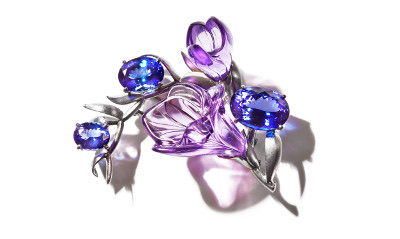
A piece that is worn, rather than a stone that waits. That is precisely where the difference lies.
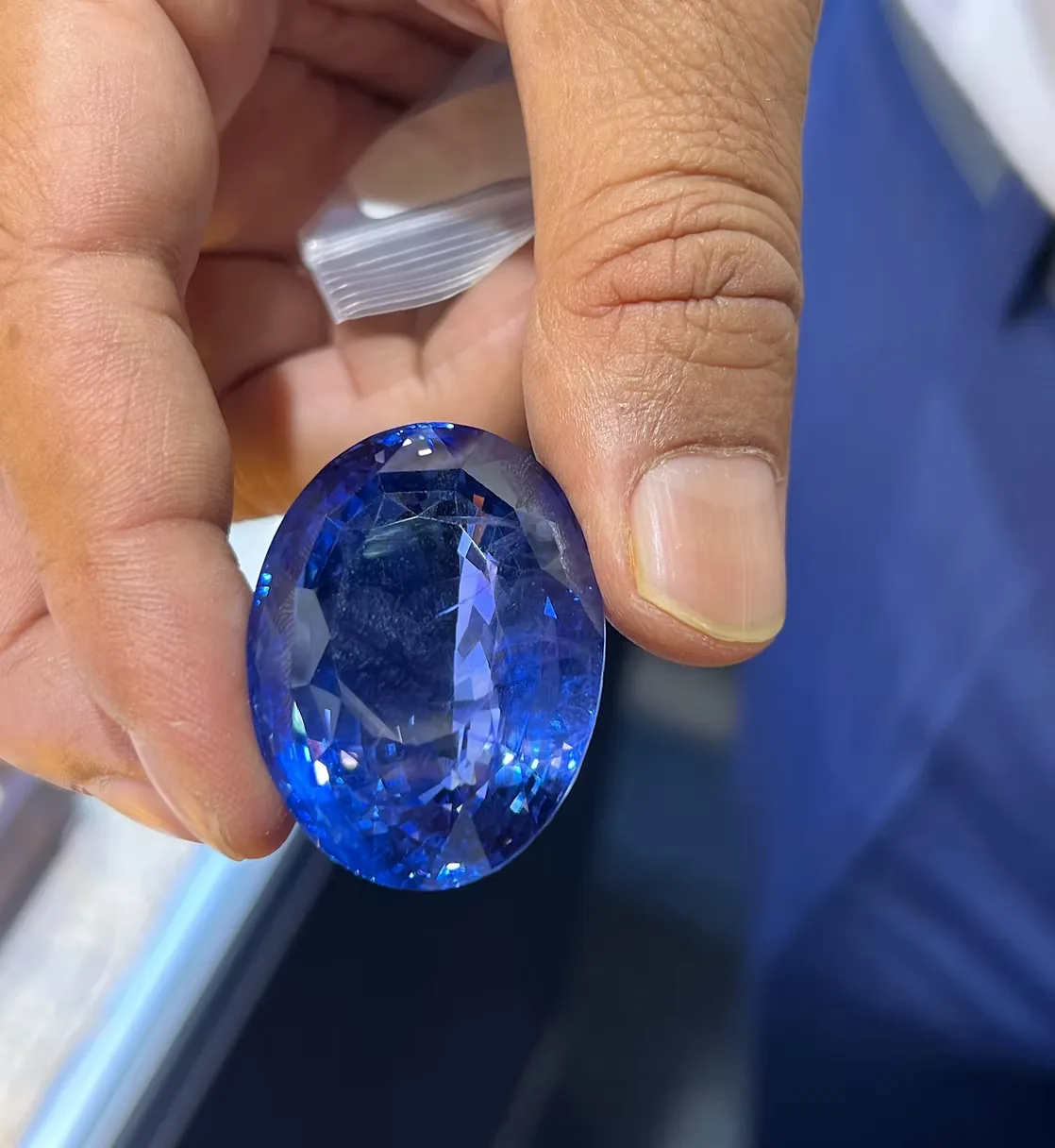
I write this as someone who works with jewellery professionally, and you may weigh it accordingly. Still, I consider the argument robust, because it does not proceed from the material but from the two psychological findings above.
Recall the problem: we buy for the moment, and life happens afterwards. Almost all categories of gift amplify this error. A bottle is drunk, a dinner is remembered, an object is replaced after two years. Jewellery is one of the very few categories in which the long term is bought along with it: it is worn, often daily, over decades, and because it is worn, it is constantly present without ever being intrusive.
Add to this a second quality that jewellery shares with almost nothing else: it stores. A ring from 1994 is not simply an old ring. It is the summer in which it was given. This ability to preserve a moment and make it retrievable decades later is the real reason why jewellery appears at moments of transition in almost every culture: at engagements, births, farewells.
And one more thing that is said less often: jewellery can be passed on. It is one of the few gifts that continue to work beyond the death of the giver. In this it fulfils Mauss's condition in its strongest form: the chain does not break. What constitutes the lasting value of a stone I have described elsewhere: Why some gemstones are ten times more valuable than others and Gemstones: beauty and substance.
None of this is an argument for a large budget. It is an argument that jewellery forgives the errors of giving if the piece has been chosen accurately. And that it punishes them mercilessly if it has not. A piece that misses the recipient does not disappear into a drawer. It lies there and says the same thing every time.
That is why the scene with the negotiating, above, was not a question of good behaviour either. It was a statement. Jewellery does not only store the beautiful moments. It also stores the one in which someone spoke about her worth before her very eyes.
Three questions instead of a rule
I distrust checklists in this field, but there are three questions I ask in almost every conversation, and they have proved surprisingly reliable.
The three questions
What does she wear every day? Not: what does she own? But: what does she reach for in the morning without thinking? That is where her taste lies, not in the jewellery box.
What should the piece remind her of? A gift without an occasion is free, but a gift with a clear inner occasion is more precise. Even if the occasion is never spoken aloud.
What would she never buy for herself? This question separates the good gift from the good purchase. What someone would get for themselves needs no giver.
The finest occasion is gratitude
The most common occasions for giving are dates. Birthday, Christmas, wedding anniversary. Dates have one advantage, you do not forget them, and one disadvantage that weighs more heavily: they create an obligation. And what is done out of obligation has already lost half its attention before it even begins.
There is one occasion that does not have this design flaw. It is called gratitude.
Whoever gives out of gratitude gives for a reason they found themselves. This occasion cannot be missed, because it has no date. It cannot be demanded, because demanded gratitude is none. And it answers the question of the amount by itself. Gratitude cannot be quantified, so it does not even try.
I consider this the most underrated reason of all to give someone something. Not because a date requires it, but because, looking back, one notices what someone has done over the years without it ever being spoken of. There is no card to buy for that.
And in practical terms, gratitude has a quality that disarms all four of the failures described earlier: it arrives at a moment nobody expected. So it can be neither obligation nor demand, neither transaction nor proof. It can only be one thing: meant.
Two coins
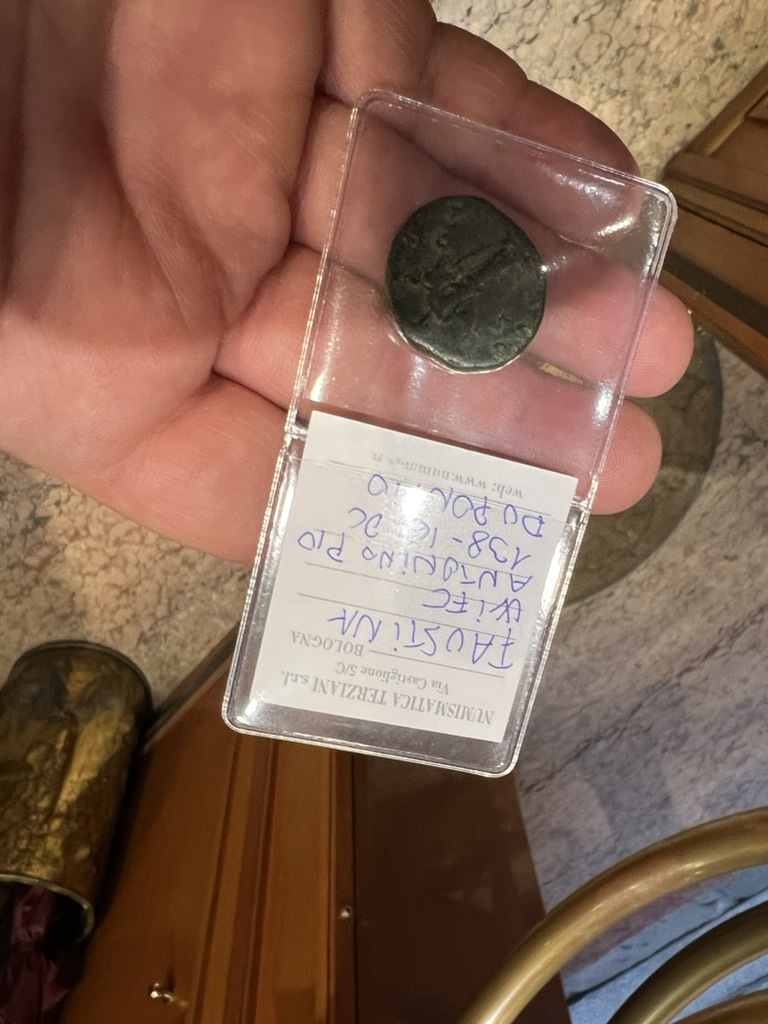
I was in Bologna, in a small coin dealer's shop, really only because I had seen something in passing: a Roman bronze coin with a patina in a green that only forms when something has lain very still for a very long time. I bought it, for myself, without further thought.
A few hours later I went back. Not because of the coin, which I already had, but because of an idea that would not let me go: if there is a second one of that quality lying there, I will give it to my wife.
There it was. The same period, the same dark green patina, the same female profile, only slightly smaller. I hesitated briefly, and precisely for that reason. A reflex I constantly observe in others and evidently have not shed myself: smaller sounds like less. Then it occurred to me that smaller, here, was simply the right measure. Not the lesser one. The fitting one.
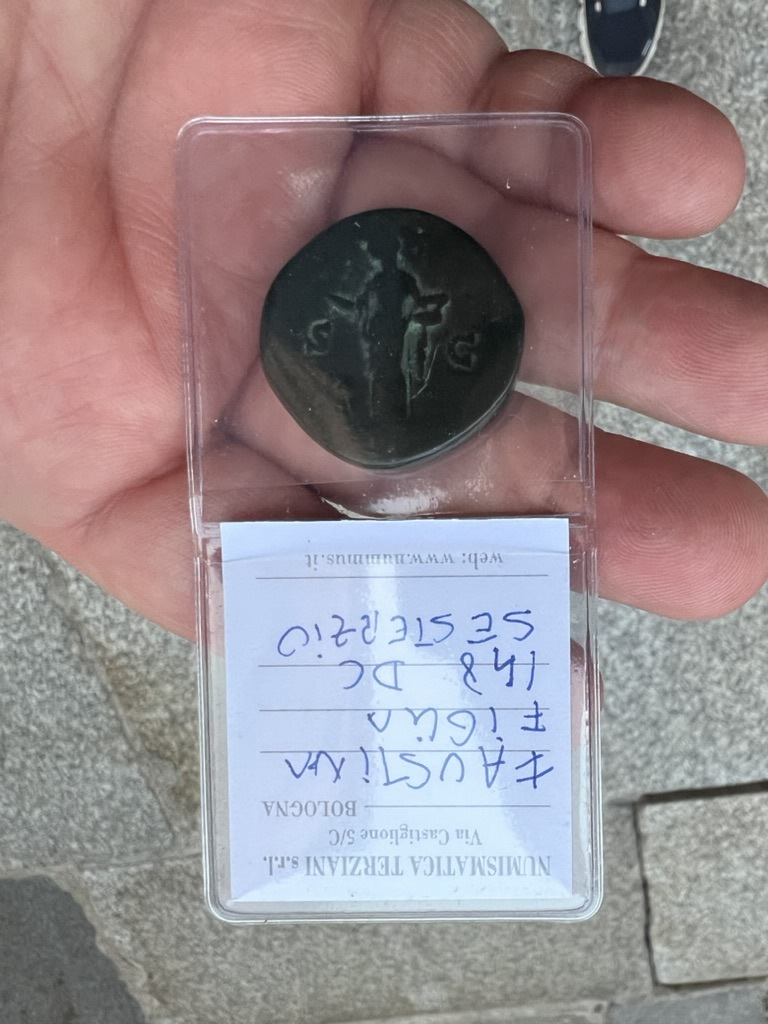
Two little cards, two names, and only at home did I notice that it was not the same one.
What I did not know at that moment only struck me at home, when I read the dealer's handwritten cards more closely: these are not two examples of the same coin.
On one it says Faustina, wife of the Emperor Antoninus Pius. On the other it also says Faustina, but with an addition: figlia. The daughter. Faustina the Elder and Faustina the Younger, mother and daughter, the same name across two generations, struck a few years apart. The daughter later married Marcus Aurelius.
And because the smaller of the two coins was the one I gave away, my wife received, of all things, the mother: Faustina, the wife. I kept the daughter. Nobody planned it that way. It simply came about, in a shop in Bologna, on an afternoon.
The two coins are to become two pieces of jewellery. Two independent pieces, each in its own right, and yet recognisably belonging together. Neither has been made yet. What I handed over was a piece of bronze and an idea.
It arrived all the same. And looking back, I believe that is exactly where the reason lies: there was no occasion. No date, no expectation, nothing that had to be fulfilled. Only the circumstance that I was standing in a stranger's shop and went back once more.
That the two have more to do with each other than I knew when I bought them is no merit of mine. It simply happened. Perhaps that too is a quality of good gifts: in hindsight, they grow larger, not smaller.
The rest is attention
What antiquity, ethnology, psychology and Buddhist practice describe in surprisingly similar terms is, in the end, unspectacular: giving is not a purchase with an emotional surcharge. It is the translation of attention into something tangible.
The object is only the vessel. It has to be good enough to carry what has been placed inside it. That is why quality is not a matter of luxury but a question of appropriateness. But it is never the thing itself.
With the two coins, the vessel is quite literally still empty. So far they are nothing but bronze with a beautiful patina; what they will one day be has yet to be decided. Perhaps that is in any case the truer state of every gift, even the finished ones. They are not handed over; they begin.
Perhaps that is also why the old word was so fitting. One does not give a cup. One pours.
If you are facing such a decision right now and notice that what you lack is less the object than clarity about what it should say, then a conversation is a better beginning than a catalogue.
Usually an hour is enough, with someone asking the right questions.