
There are moments on a buying trip when I forget that I am here to work. When a dealer opens a small white box and inside lies a stone whose colour I have never seen quite like this before.
When the light falls through a cabochon and a hair-fine line travels across the surface, as though someone had drawn a fingernail over silk. Then I stand there, at a market in Southeast Asia, among plastic chairs and neon tubes – holding something in my hand that took millions of years to form.
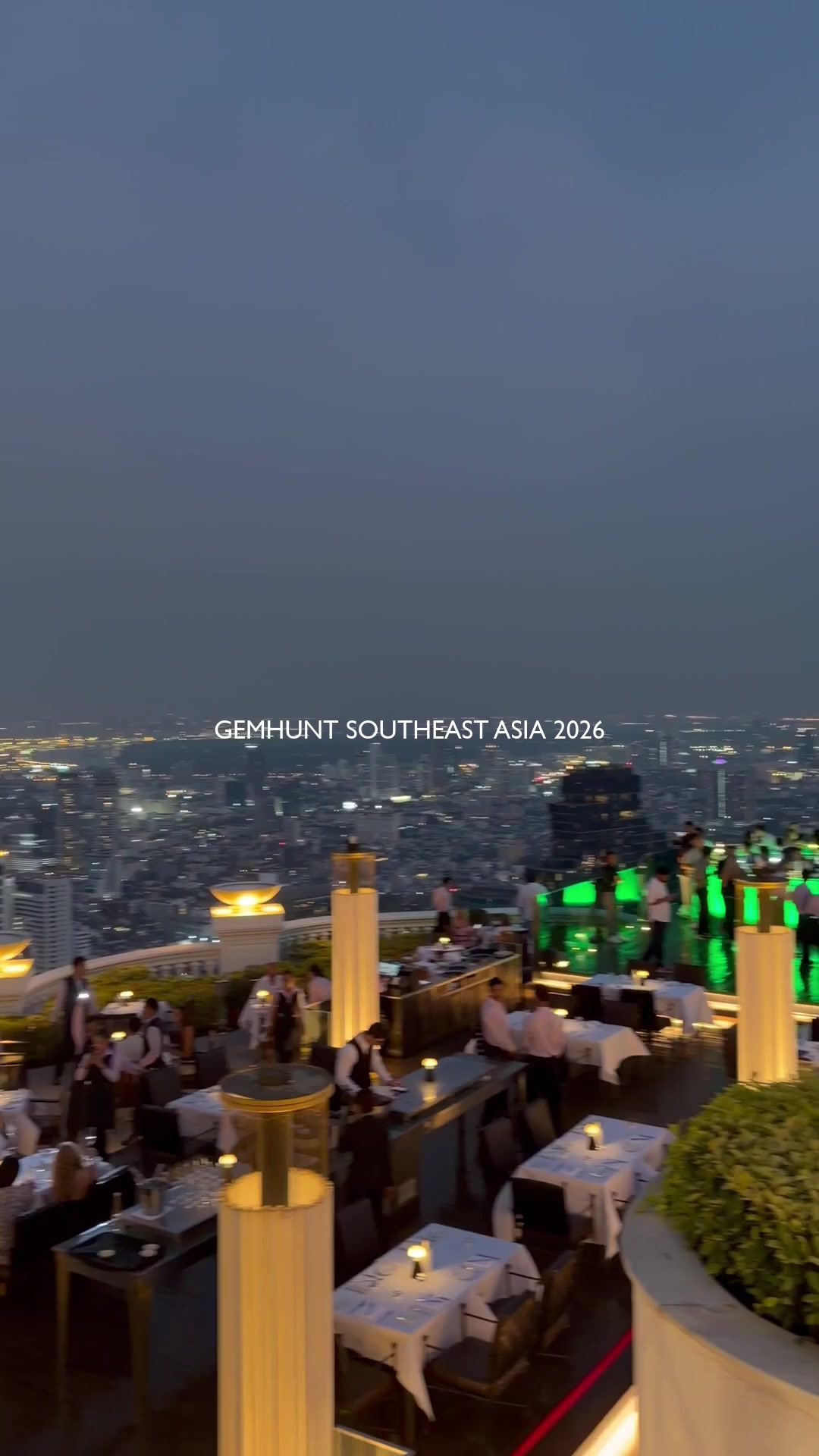
I have just returned from this year's Gemhunt in Southeast Asia. A few days that feel like weeks, because every single one is full of decisions, encounters and stones one does not forget.
The market
Anyone who imagines a gemstone market in Asia to be like a jewellery fair in Europe is mistaken. There are no white walls here and no spotlights. The markets are loud, roofed with corrugated iron, the tables stand close together. Women dealers sort jade bangles next to pearl necklaces next to coloured stones lying in rows in foam trays like a geological library.
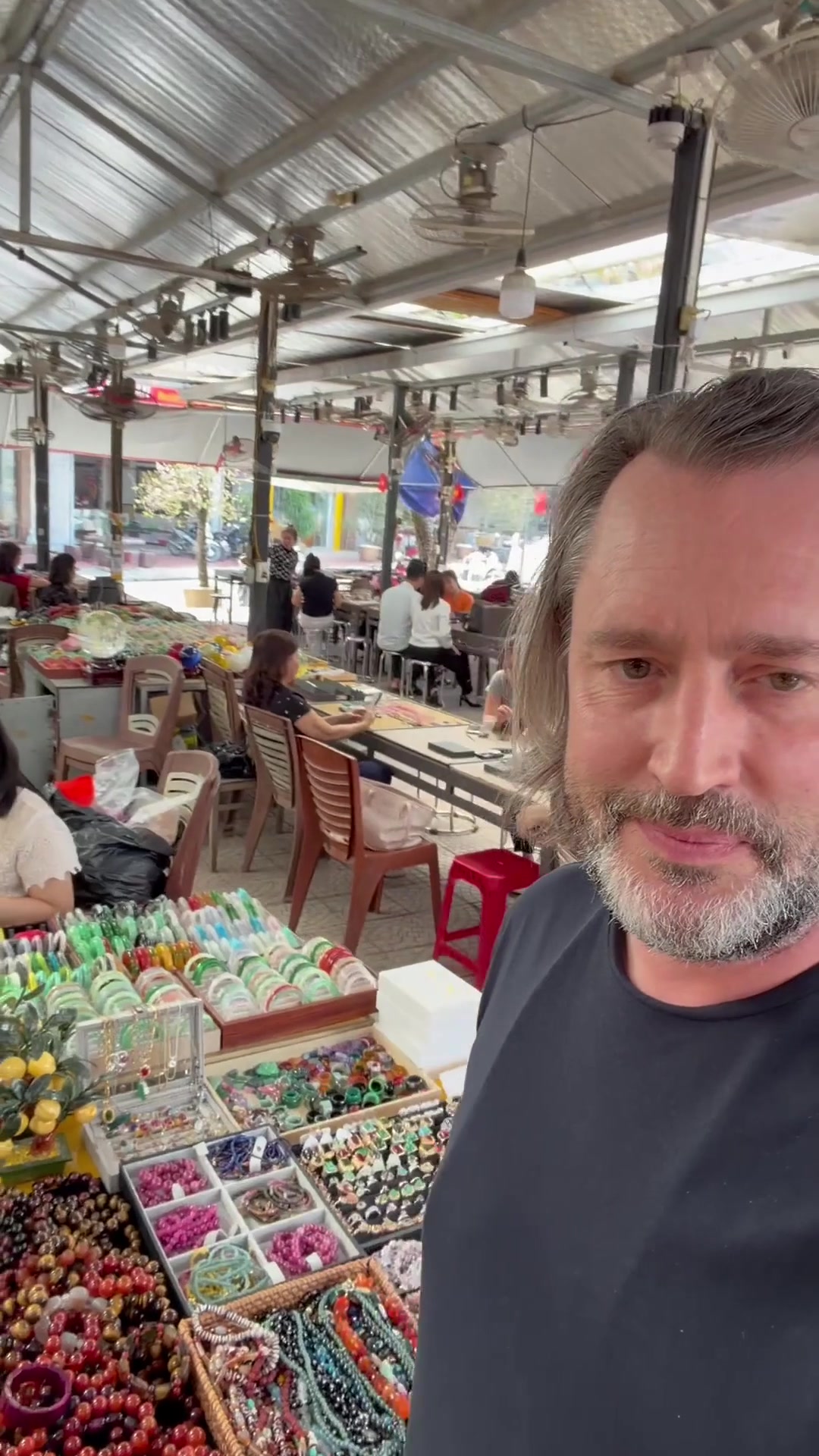
What makes these places special is not the range on offer – that is overwhelming and for the most part uninteresting. What makes them special is that you find stones here that exist at no European fair. Stones too small for the great auction houses, but too unusual for the ordinary trade. Precisely my terrain.
What the market tells you
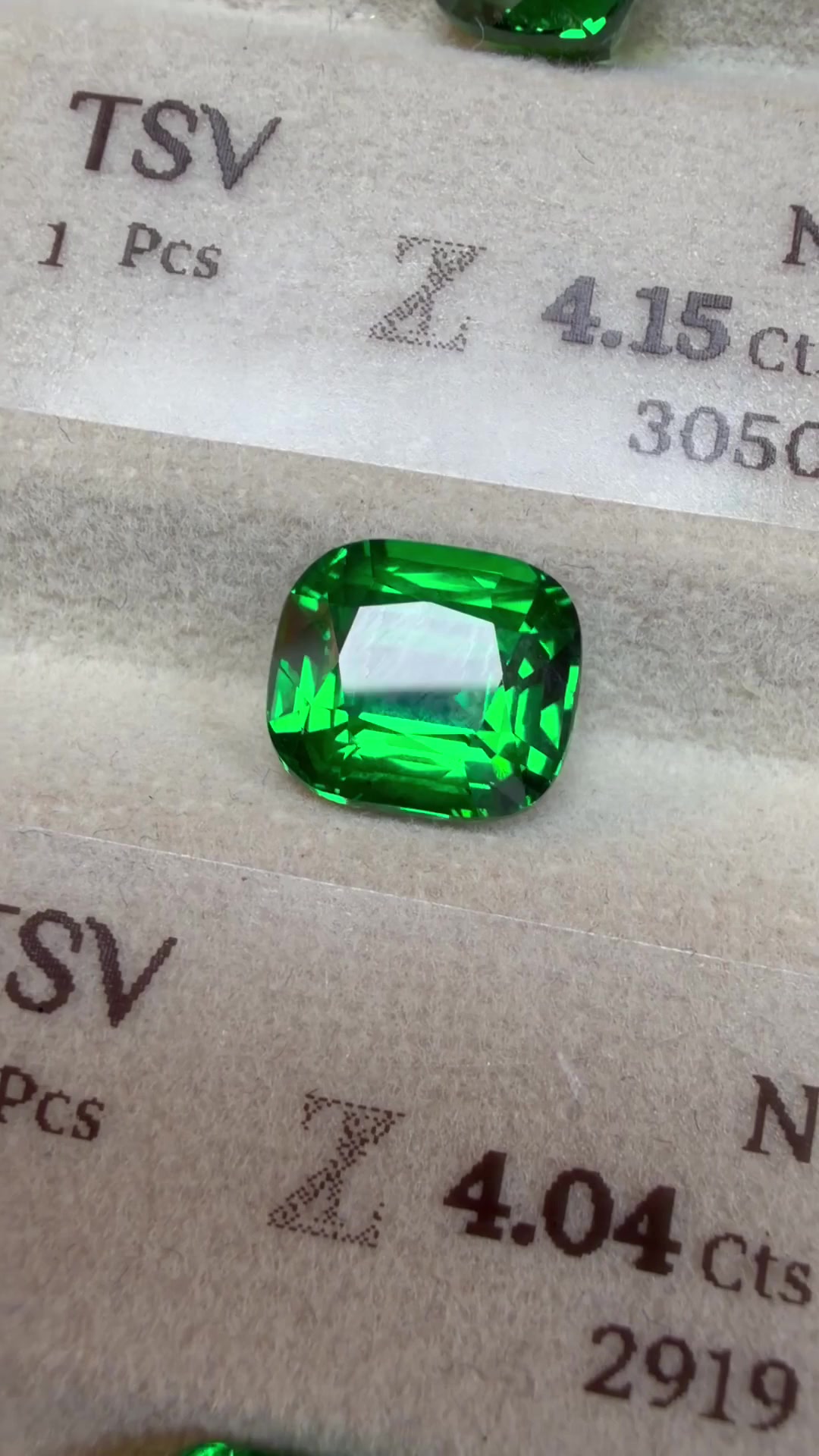
Every trip has a mood, too – a theme that runs through the conversations with dealers. This year it was unmistakable: garnets. Everywhere they were sought, traded, discussed. Above all mandarin garnet – a stone in an orange so intense that connoisseurs simply call it „Fanta colour". Alongside it tsavorite, the green garnet from East Africa that has been quietly gaining in importance for years. And raspberry garnet, a strong raspberry red that sits somewhere between rhodolite and pyrope.
Why garnets are special
The garnet family is one of the most varied among gemstones. From green through orange to deep red, from transparent to opaque – no other mineral offers such a range of colours and characters.
At the same time, large specimens are becoming ever rarer. Stones above ten carats in good quality hardly appear on the market any more, and when they do, it is at prices that would have been unthinkable five years ago.
Spinels were also in particular demand this year. Which does not surprise me – the stone has enjoyed a quiet renaissance over the past five years. Collectors and connoisseurs have long known what the broader market is still learning: that a fine spinel yields nothing to a ruby, except in price.
Why colour is winning right now
Behind the demand for garnets and spinels lies a larger trend: the coloured gemstone market is developing more positively than it has in decades. People want colour – in their jewellery, in fashion, in life. That is no coincidence. The great haute joaillerie houses, too, are increasingly turning to coloured gemstones rather than the classic diamond solitaire. When Cartier and Van Cleef take more tsavorites and spinels into their high jewellery collections, it moves the entire market.
Primary and secondary: where the stones really come from
One aspect that becomes clear again and again on trips like this, and which I consider important: the question of deposits. In Southeast Asia one frequently encounters stones from so-called secondary deposits – meaning the stones were not mined where they originally formed, but were displaced by erosion and water over geological timescales. They turn up in riverbeds and alluvial plains, often far from their primary source.
That is no disadvantage – on the contrary, some of the most beautiful stones come from secondary deposits. But it does mean that origin is harder to determine. With a primary deposit such as the Mogok mines in Myanmar or the emerald mines in Colombia, one knows exactly where a stone comes from. With secondary deposits, a question mark sometimes remains – and that is precisely why expertise matters so much.
Five stones that would not let go of me on this trip
Every trip has its own colour. This year it was unusually broad – from deep red through electric blue to a pink that turns almost lilac at the corner of the eye.
The spinel
When someone asks me which stone is currently the most underrated, I have been saying the same thing for years: spinel. This one confirms it. A cushion cut, strong red with a touch of pink, which glows in daylight as though someone had placed a candle behind it. Spinels have something rubies often lack: a clarity that comes from within. No window, no dead zones – simply even, living red.
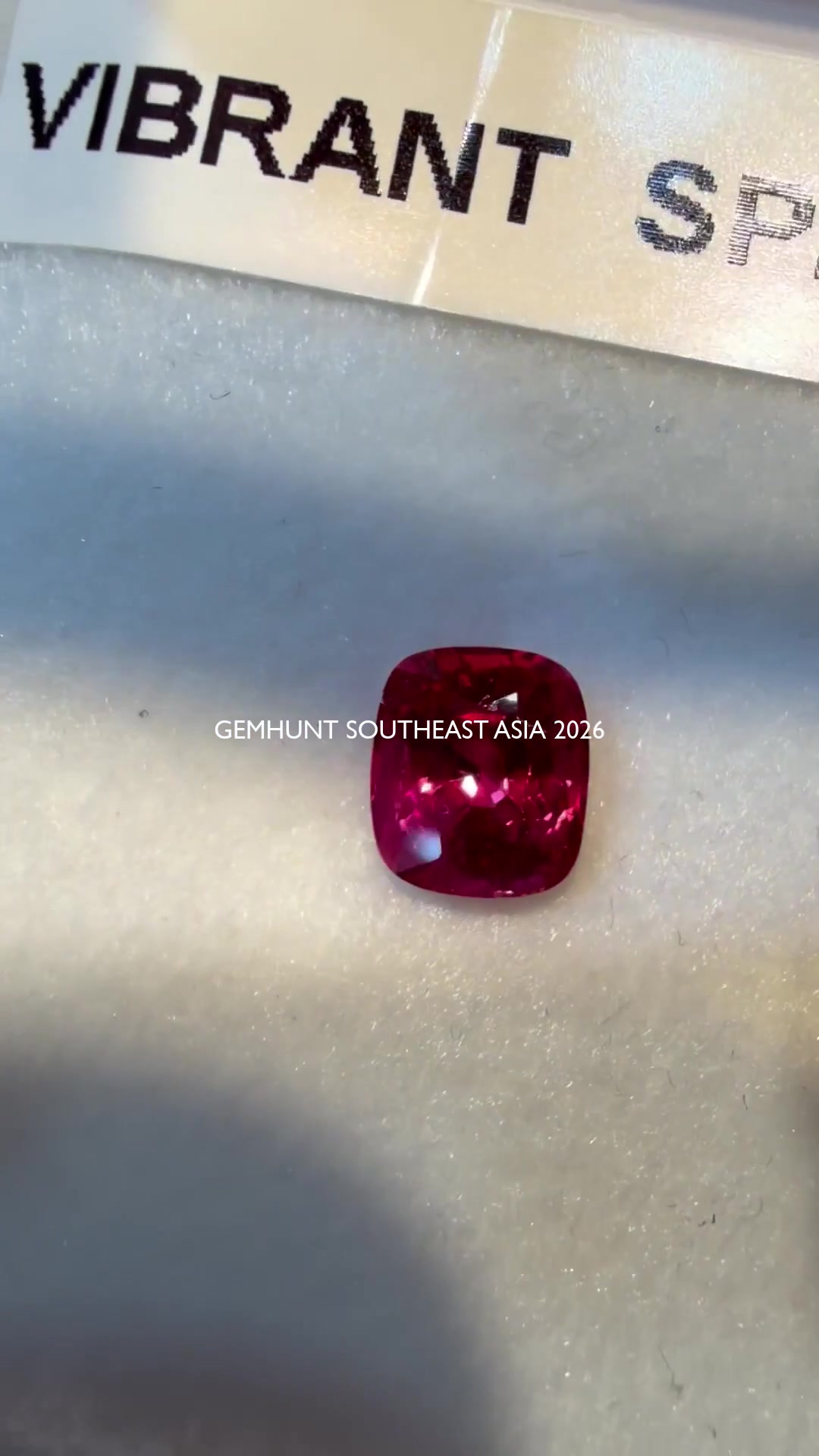
Historically, spinel was mistaken for ruby for centuries. The famous „Black Prince's Ruby" in the British crown is in truth a spinel. Today the stone has its own name and its own following – above all among collectors who know that quality does not depend on fame.
The tourmalines
Then a find that is rare: a matched pair of bicolour tourmalines. Elongated emerald cut, each with a colour gradient from warm cognac through a rich green to a cool mint tone. The two stones look like siblings – similar enough to belong together, different enough to remain interesting.
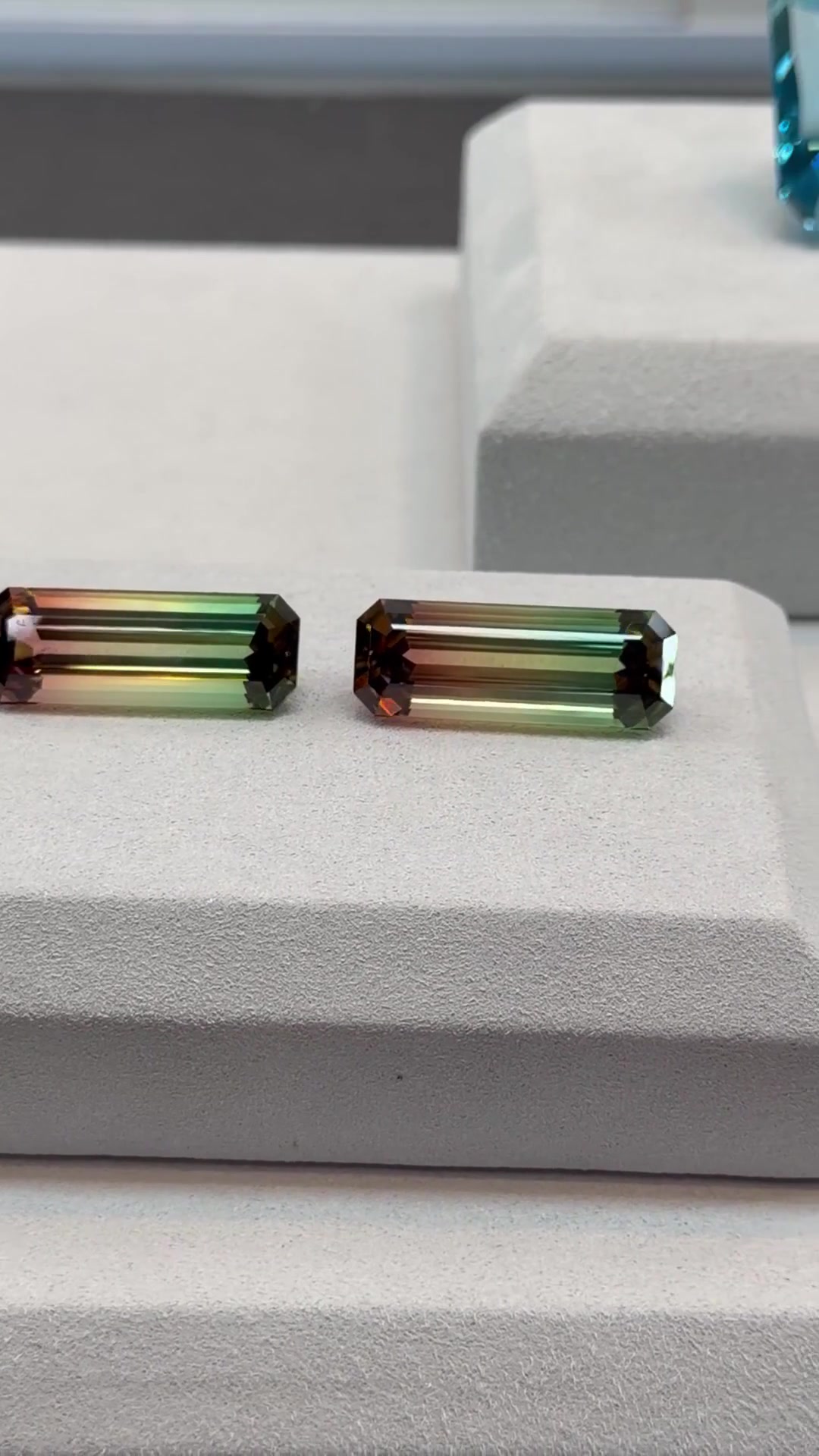
Matched pairs are so hard to find because nature does not think in pairs. Every crystal grows differently, and to obtain two stones of comparable colour, saturation and size from the same source is like finding two snowflakes that resemble each other. For earrings or cufflinks, such pairs are irreplaceable.
The neon tanzanites
Most people know tanzanite as a blue stone – somewhere between sapphire and iolite. What most do not know: neon tanzanite. An intense, electric blue-violet that seems almost surreal. I saw two cabochons, side by side in a dealer's cabinet, and had to look twice. One deeply saturated and almost opaque with colour, the other lighter, more translucent, with a milky shimmer.
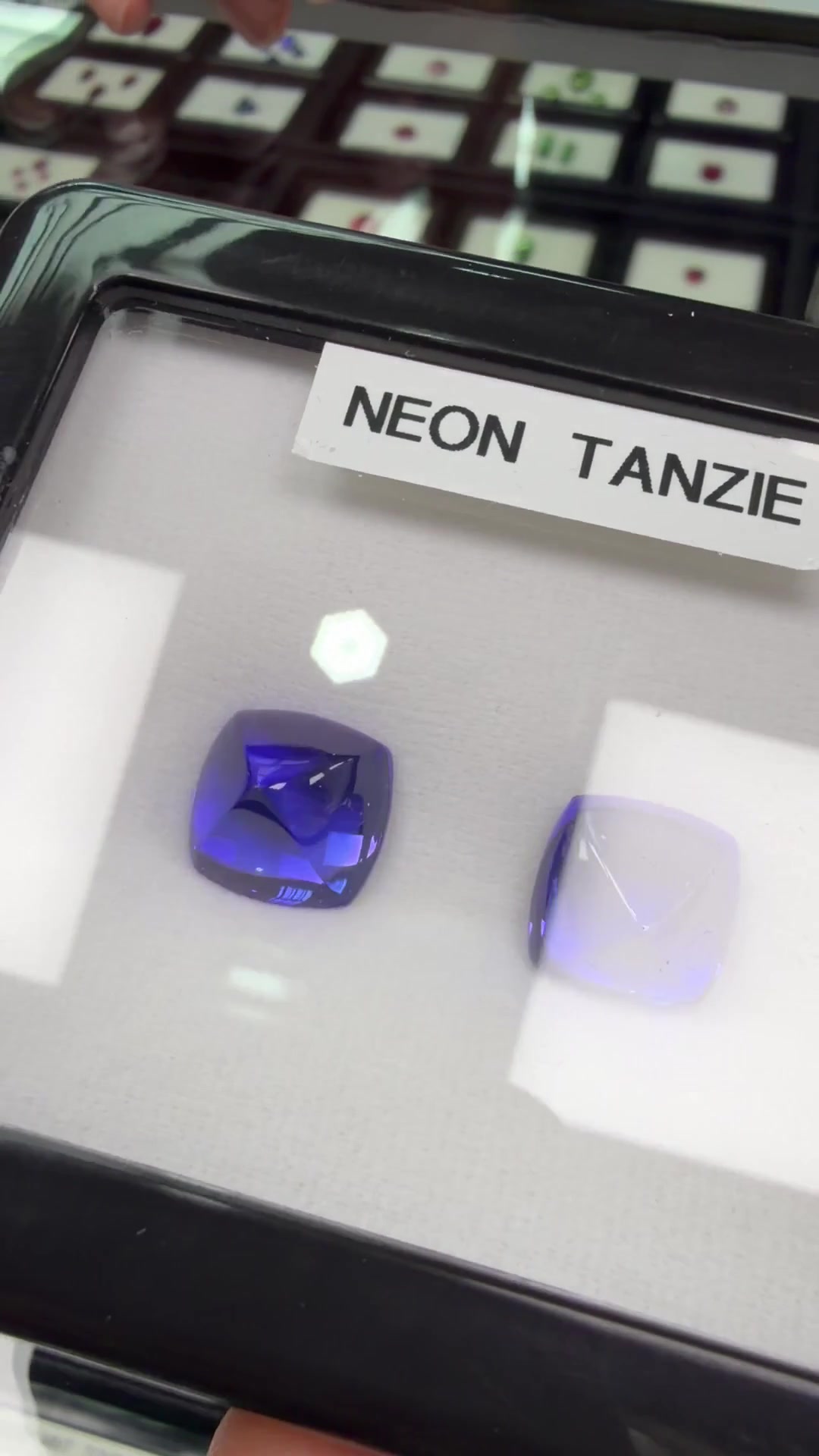
Cabochons have no facets – the domed, smooth surface makes the light work differently. Instead of sparkling, they glow. In a stone with this colour saturation, it is an effect that catches the eye in a room without being loud.
The kunzite
Then a stone that is often overlooked: kunzite. Named after the gemmologist George Frederick Kunz, who described it at the beginning of the 20th century. Mine is a generous emerald cut in a delicate pink-violet that shifts between lilac and warm pink depending on the light. Held in the hand – and I held it in my hand for a long time before I decided – it looks almost like frozen evening light.
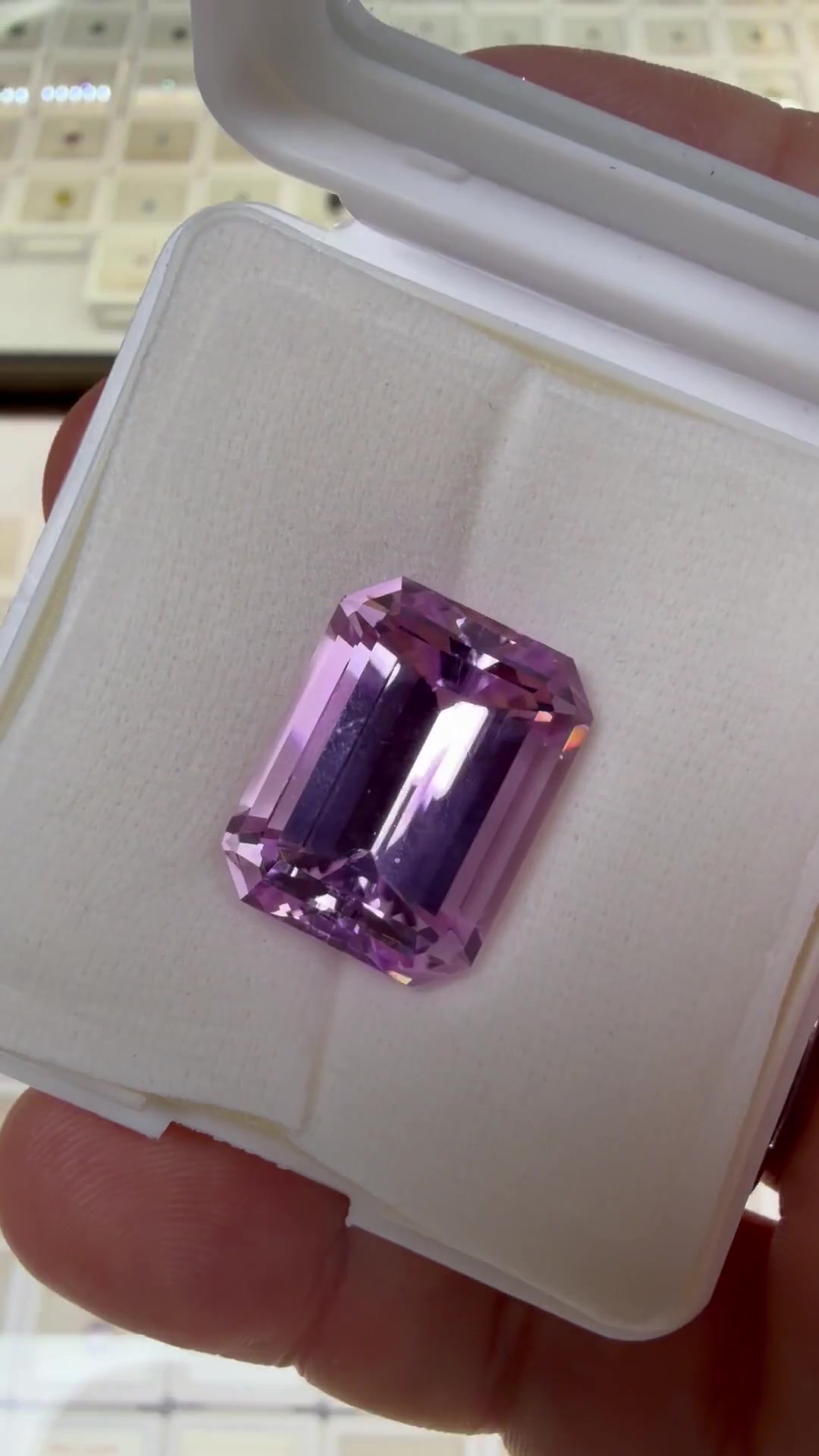
Kunzite is more delicate than many other gemstones – it can lose colour under prolonged strong sunlight. That makes it a stone for evening jewellery, for special occasions. And it makes it a stone with character: whoever wears it knows its idiosyncrasies and values it all the more for them.
The cat's eyes
The last find is perhaps the most unusual. Two chrysoberyl cabochons with a pronounced cat's-eye effect – chatoyancy, as the technical term goes. When you turn the stones under a single light source, a bright, sharp line travels across the domed surface. The effect arises from the finest needle-like inclusions in the crystal, which focus the light like a mirror.
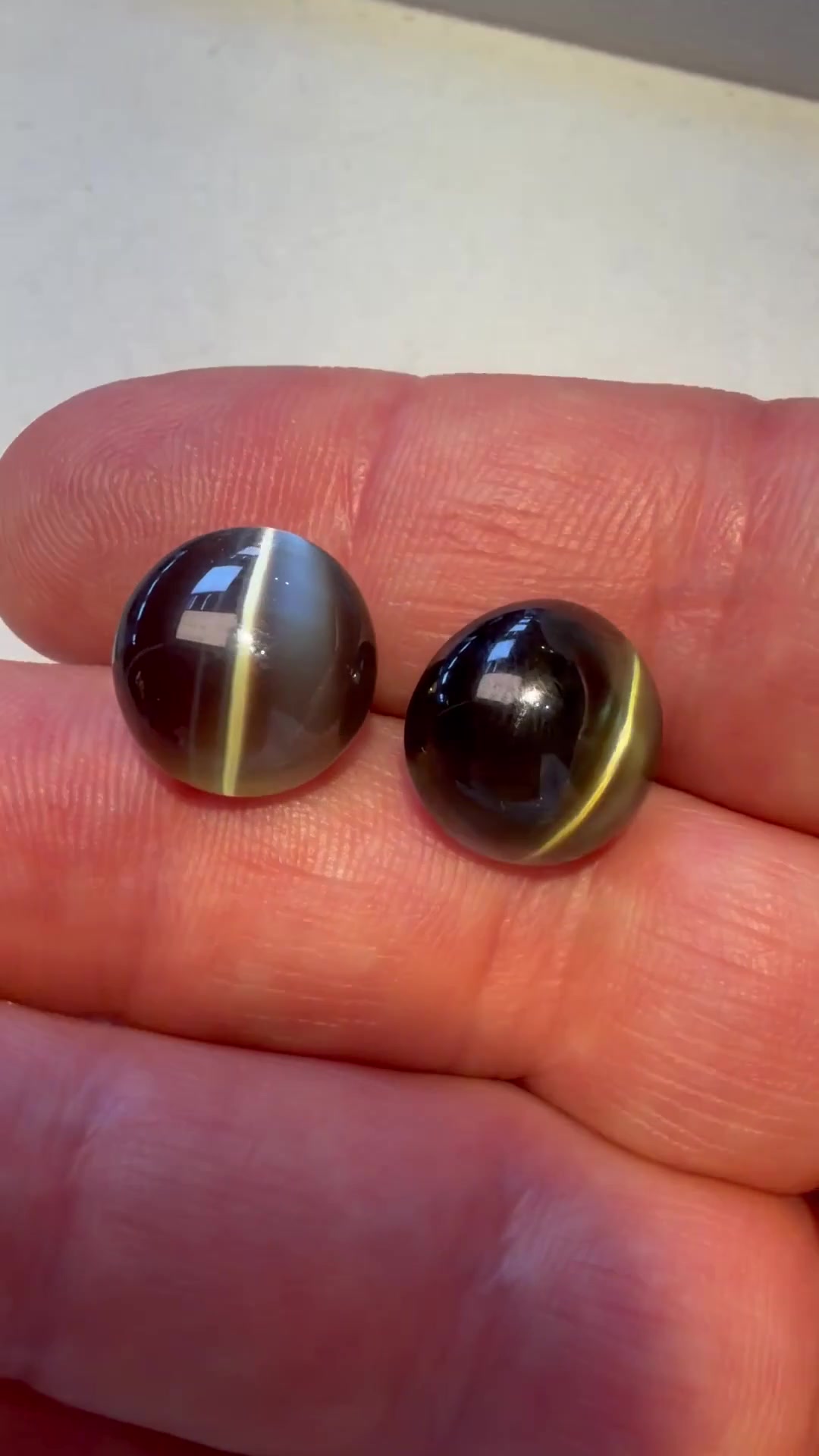
These two stones have a dark, honey-brown base colour with a slightly greenish shimmer – and the line is razor-sharp. I know few phenomena in gemmology that impress so immediately. You need know nothing about gemstones to stop in front of a cat's eye and marvel.
What remains
Every trip brings stones home. But it also brings impressions that fit into no certificate. The way a dealer in Bangkok holds a stone up to the light, with a matter-of-factness that speaks of thirty years' experience. The sound when a lot of stones is poured onto a velvet cloth – a soft, dry clicking. And again and again the moment when a stone is more than the sum of its data: not just carat, cut and origin, but something one has to see in order to understand.
The stones from this trip are now in my atelier in Munich. Some are waiting for the right project. Some for the right person. And sometimes it is the other way round: a person comes to me with an idea, and one of these stones fits so exactly that it might have known back at the market where it belonged.
If this has made you curious – I would be glad to show you what I brought back.
Ideally over a coffee in the atelier.